The location of Swansea (Abertawe) gives the city an enormous advantage. Its history reflects a site of continuous occupation stretching back a thousand years. Like most prosperous settlements, Swansea’s foundation at the mouth of the River Tawe gave the original residents access to national and international trade and fertile land for the development of farms and communities.
The original Norman castle 1, founded in 1107, is an example of the surviving origin of the city now integrated into a public space. Although today the castle is dwarfed by surrounding buildings, it remains a survivor at the heart of the city 2.. Swansea Castle has been transformed by Swansea Council’s multi-million pound investment in the city’s regeneration plan. Castle Square Gardens, directly adjacent to the medieval Swansea Castle, has been redesigned from the hard-paved urban space into a greener, vibrant community hub.
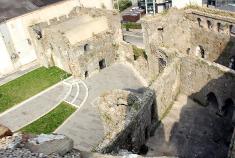
As a port with trading links across the Bristol Channel, as well as to France and Ireland, Swansea developed into a prosperous market town. By the 18th century it was well established as a civic and cultural entity and as a fashionable tourist resort.3 In the Industrial Revolution of the 18th and 19th centuries, coal mining, copper smelting and tinworks expanded in the Swansea valley, making Swansea the centre of a new industrial and commercial area, nicknamed "Copperopolis," producing roughly 90% of the world's copper and driving massive growth in metalworking, coal mining, and tinplate manufacturing. As the population grew, Swansea flourished as a cosmopolitan centre, and a strong base for commerce, industry and science, credentials it retains and nurtures today.4
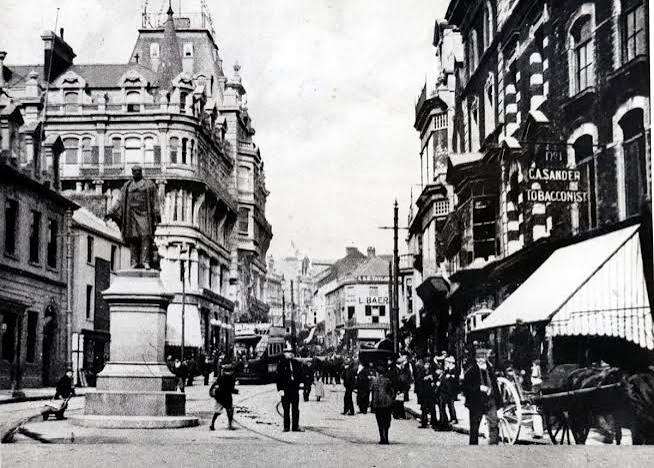
Throughout the 20th century although industry declined the town continued to grow in population and Swansea officially gained city status in 1969. Gerald Gabb, a local historian reflects on the development of Wind Street in the city as an example of how the city developed over time. “The story of this short, curved street is the story of Swansea itself. Wind Street would have been busy, with visitors from all over throughout with customs officers based on Wind Street.” As the settlement of Swansea became more wealthy so did Wind Street. Swansea and its industry grew throughout the 19th century, changing the geography of the town as its surrounding areas became incorporated into its municipal boundaries.5
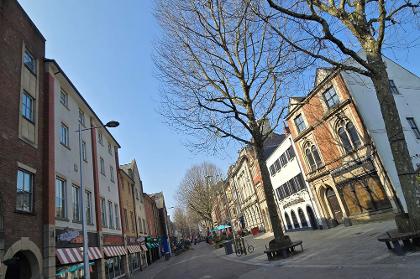
Today, this characterful street is successfully integrated into the modern city. A £3 million Wind Street improvement project led by Swansea Council is complete. Part of the ongoing regeneration of the city, it includes the introduction of new paving, seating and greenery, with dedicated outdoor spaces for hospitality and dining areas. As part of the scheme Wind Street has also become more accessible with clear, accessible routes for pedestrians of all abilities, and the street is now all at one level to provide a flexible space for events and other activities.The Swansea Council scheme followed consultation with residents and businesses.6
The city and its environs continue to grow and adapt, integrating new skills and technologies into its cultural and industrial roots. The governance of Swansea Council and the Welsh Government are sensitively maintaining the roots of South West Wales and constructing sustainable integrated development for its future regeneration. Projects like the historic Swansea Castle, the commercial culture of Wind Street and the new technology potential of Parc Felindre represent the balance between integration and transformation.

Integration and Transformation
Parc Felindre the 16-hectare strategic business park targets high-tech manufacturing, ICT, and life sciences. The broader longterm vision includes a sustainable "live/work" community with up to 800 homes, green spaces, and digital infrastructure connected to the Swansea Bay City Region.
Contact our agent direct for more information on Business Land with a difference. Available NOW!
References
1 The Early Castles from the Norman Conquest to 1217, page 29.
2 https://www.swansea.gov.uk/swanseacastletoday
3 Wikipedia / Gabb, Gerald (2019). Swansea and its History. Volume II: The Riverside Town. Part 1: The Men of Power. Swansea:
4 Wikipedia / Miskell Louise (2006). 'Intelligent Town': An Urban History of Swansea, 1780-1855.
5 https://www.walesonline.co.uk/news/local-news/colourful-1000-year-history-swanseas
6 https://www.swansea.gov.uk/windstreet
Photographs courtesy of
1 https://www.swansea.gov.uk/swanseacastletoday
2 https://www.walesonline.co.uk/news/local-news/colourful-1000-year-history-swanseas
3 https://www.swansea.gov.uk/windstreet